

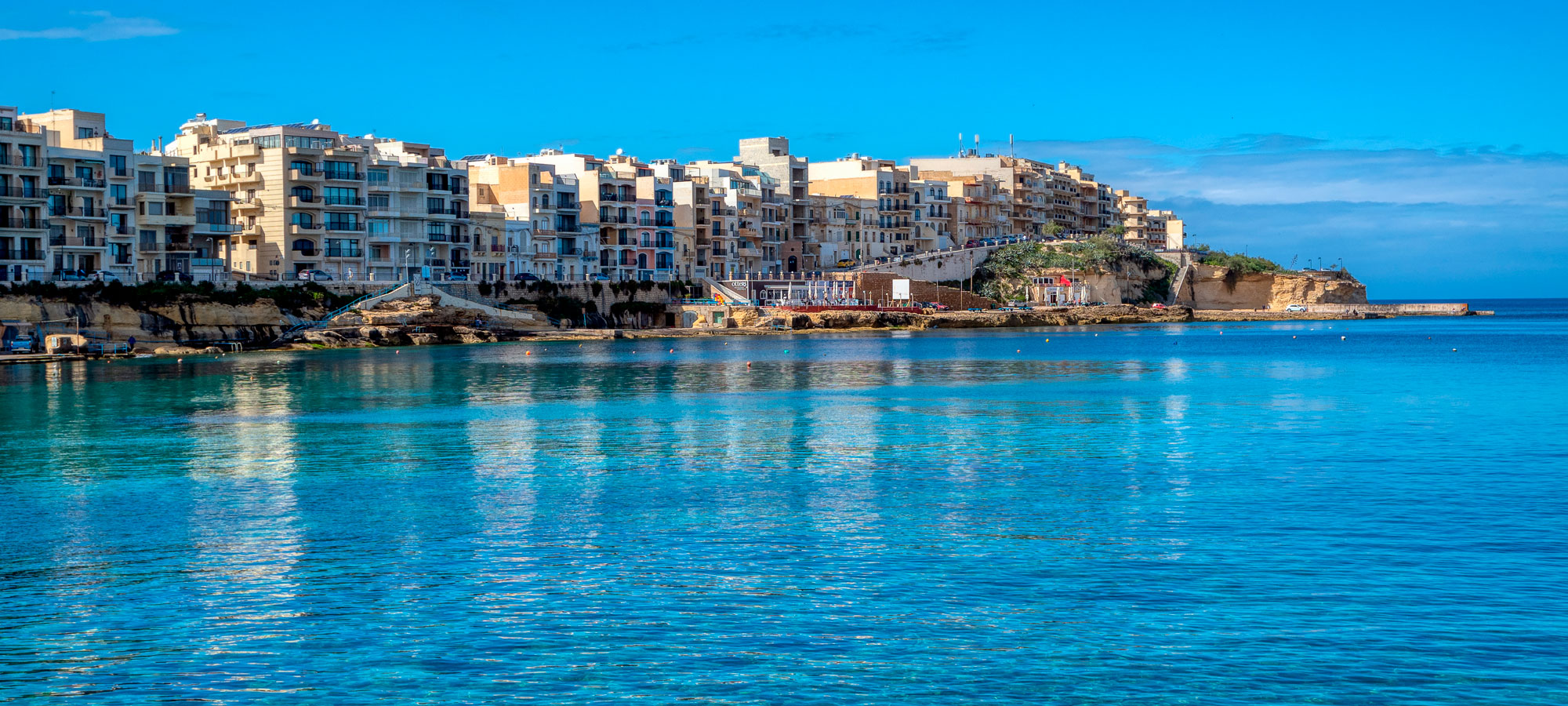




Malta Golden Visa, Passport & Residence Programmes
One Client. One Journey. One Platform.
- 1 Article Summary: Malta Visa
- 2 Key Takeaways: Malta Visa
- 3 Malta Golden Visa, Passport & Residence Programmes: Overview
- 4 Do UK Nationals Need a Malta Visa?
- 5 Malta Visa Requirements for UK Nationals
- 6 Malta Residence Programmes for UK Nationals: A Comparison Guide
- 7 Malta Permanent Residence Programme (MPRP) and Malta Golden Visa
- 8 Malta Global Residence Programme (GRP)
- 9 Malta Retirement Programme (MRP)
- 10 Malta Passport and Maltese Passport Pathways
- 11 Malta Citizenship by Merit Explained
- 12 Is Malta Right for You?
- 13 Why Choose Advice for Expats
- 14 FAQ: Malta Golden Visa, Passport & Residence Programmes
- 15 People Also Ask: Malta Golden Visa, Passport & Residence Programmes
- 16 Start Your Journey
Article Summary: Malta Visa
For UK nationals considering a move abroad, Malta offers one of the widest ranges of residency and citizenship-related programmes available in Europe. Options include the Malta Permanent Residence Programme (MPRP), the Malta Global Residence Programme (GRP), the Malta Retirement Programme (MRP) and pathways that may ultimately lead to a Malta passport or Maltese passport through long-term residence and integration.
The challenge is not finding a programme. The challenge is selecting the correct one. Different routes suit UK retirees, investors, business owners and internationally mobile families in very different ways. Choosing the wrong structure can create avoidable tax, pension, residency and wealth-planning problems that become expensive to correct later.
This guide explains the main Malta visa routes, residency programmes, Malta golden visa opportunities and passport pathways available to UK nationals, helping you identify which structure is most likely to support your long-term objectives.
Key Takeaways: Malta Visa
- UK nationals require the correct Malta visa or residency route to live in Malta long-term following Brexit.
- The Malta Permanent Residence Programme (MPRP) is commonly associated with the Malta golden visa and remains one of Malta’s most popular residency-by-investment structures.
- The Malta Global Residence Programme (GRP) and Malta Retirement Programme (MRP) are designed for different applicant profiles and tax objectives.
- A Malta passport is not acquired through simple investment and should not be confused with residency programmes.
- The most suitable programme depends on income sources, pensions, taxation, family circumstances and long-term plans.
- Most costly mistakes occur before relocation rather than after arrival.
Malta Golden Visa, Passport & Residence Programmes: Overview
Interest in Maltese residency programmes has increased significantly among UK nationals since Brexit. Many British expats are looking for a stable European base that offers long-term security, access to a respected legal system and a clear residency framework.
For a complete relocation overview, see the Moving to Malta from the UK Guide.
What makes Malta different is that it does not rely on a single residency route. Instead, UK nationals can choose between multiple programmes, each designed to achieve different objectives. Some are aimed at UK retirees. Some are aimed at UK investors. Others are designed for individuals seeking tax efficiency or long-term residence without major investment commitments.
This is where many UK expats make mistakes. They focus on obtaining approval rather than selecting the structure that best supports their long-term plans. In reality, the programme chosen can affect taxation, pensions, healthcare access, wealth planning and future mobility for many years.
The question is therefore not whether Malta residency is available. The question is which route best supports your personal, financial and family objectives.
Do UK Nationals Need a Malta Visa?
One of the most frequently asked questions is simple: do UK nationals need a Malta visa?
For short visits, UK citizens can generally travel to Malta without establishing long-term residency. However, the position changes completely once the intention is to live in Malta on a permanent or long-term basis.
Many British expats mistakenly assume that entry rights and residency rights are the same thing. They are not. Entering Malta for a short stay does not create long-term residence rights and does not provide access to Malta’s residency programmes.
Anyone planning to relocate, retire or establish long-term residence should ensure that they qualify under an appropriate residency structure. Whether that involves the Malta Permanent Residence Programme, Malta Global Residence Programme, Malta Retirement Programme or another route depends on individual circumstances.
The most important point is that residency planning should begin before relocation. Fixing structural mistakes after arrival is usually far more difficult and expensive than selecting the correct route from the outset.
For official visa procedures and entry requirements, refer to the Malta Central Visa Unit.
Malta Visa Requirements for UK Nationals
The specific Malta visa requirements vary depending on the route selected. However, most applications require applicants to demonstrate financial stability, suitable accommodation arrangements and access to healthcare.
This is where many UK nationals become overly focused on paperwork. In practice, the application process is only one part of the decision. The more important question is whether the selected structure aligns with your long-term objectives.
For example, the ideal route for a UK retiree may be completely unsuitable for a business owner. Likewise, a structure that works well from a residency perspective may be less effective from a tax-planning or pension-planning perspective.
This is particularly relevant when considering the Malta Permanent Residence Programme, Malta Global Residence Programme and Malta Retirement Programme. Each has different qualification requirements, financial commitments and long-term implications.
The strongest applications are usually supported by a clear strategy before submission rather than an attempt to optimise the position after approval.
For official guidance on Malta visa requirements, documentation and application procedures, review the Malta Visa Requirements and Application Guidance.
Malta Residence Programmes for UK Nationals: A Comparison Guide
Most UK nationals begin by asking which programme they qualify for. The better question is which programme is most appropriate for their circumstances.
The three most important residency structures are the Malta Permanent Residence Programme (MPRP), the Malta Global Residence Programme (GRP) and the Malta Retirement Programme (MRP). While all three provide pathways to residence in Malta, they are designed for very different applicants.
| Programme | Best For | Main Requirement | Key Benefit | Main Consideration |
|---|---|---|---|---|
| Malta Permanent Residence Programme (MPRP) | Investors and high-net-worth individuals | Purchase qualifying property (currently €375,000+) or rent qualifying property (currently €14,000+ p.a.), government contribution and qualifying assets | Permanent residence rights and Schengen access | Significant capital commitment |
| Malta Global Residence Programme (GRP) | Non-EU nationals seeking tax efficiency | Qualifying property and minimum annual tax liability of €15,000 | 15% tax rate on foreign income remitted to Malta | Designed primarily for tax residents |
| Malta Retirement Programme (MRP) | Retirees with qualifying pension income | Pension must represent the majority of income and qualifying property must be maintained | Retirement-focused tax framework | Designed specifically for retirees |
The figures above are subject to change and should always be verified before application. However, they illustrate an important point. The best programme is rarely determined by eligibility alone. The most suitable route depends on how your income, pensions, assets and long-term objectives interact with Malta’s residency framework.
The Malta Permanent Residence Programme is usually the route most closely associated with the Malta golden visa concept. It is often attractive to investors seeking stability and long-term residence rights.
The Malta Global Residence Programme is generally more attractive to individuals focused on tax efficiency and international tax planning. Meanwhile, the Malta Retirement Programme is specifically designed for UK retirees seeking a structured framework for living in Malta.
The critical point is that there is no universally best programme. The best programme is the one that aligns most effectively with your source of income, tax position, retirement objectives and long-term plans. For many UK nationals, identifying that structure correctly is the most important decision in the entire relocation process.
Malta Permanent Residence Programme (MPRP) and Malta Golden Visa
For many UK nationals, the Malta Permanent Residence Programme (MPRP) is the most attractive residency route currently available. It is also the programme most commonly associated with the term Malta golden visa, even though Malta does not officially use that title.
The MPRP is generally best suited to UK investors, business owners and financially established individuals who want long-term residence rights without relying on employment, pension income or ongoing business activity in Malta. Unlike some other residency routes, the programme is built around financial standing, qualifying property commitments and government contributions rather than active economic participation.
To qualify for the Malta Permanent Residence Programme, applicants typically purchase qualifying property from €375,000 or rent qualifying property from €14,000 per year. The programme also requires a government contribution, a charitable donation and proof of qualifying assets, all subject to periodic review and change. While the investment thresholds are significant, many British expats view the programme as a long-term stability and mobility solution rather than a simple residency application.
If you are considering purchasing rather than renting, our Property in Malta for UK Expats guide explains AIP permits, locations, prices and buying strategies for British nationals.
The biggest advantage of the Malta golden visa is flexibility. It provides permanent residence rights, access to the Schengen Area and a stable legal framework without requiring applicants to spend most of their time physically present in Malta. This makes it particularly attractive for internationally mobile UK families and individuals who want options rather than obligations.
However, the programme is not ideal for everyone. UK retirees whose primary objective is tax efficiency may be better served by the Malta Retirement Programme. Likewise, individuals primarily focused on remittance-based tax planning may find the Malta Global Residence Programme more suitable.
This is where many UK nationals make expensive mistakes. They focus on qualifying for the Malta golden visa rather than asking whether it is the most appropriate structure. In practice, the best programme is rarely the one that sounds most attractive. It is the one that aligns most effectively with your income, assets, pensions and long-term plans.
Malta Global Residence Programme (GRP)
The Malta Global Residence Programme (GRP) is often the most misunderstood residency route available to UK nationals.
Many British expats initially compare the GRP with the Malta golden visa, assuming the programmes achieve the same objective. They do not. While the MPRP is primarily a residency-by-investment framework, the GRP is fundamentally a tax-driven residency structure designed for qualifying non-EU nationals.
The programme is typically most attractive to internationally mobile UK individuals who receive income from overseas investments, businesses or other foreign sources and who wish to establish a tax-efficient base in Malta. Under the programme, qualifying foreign income remitted to Malta is generally taxed at 15%, subject to a minimum annual tax liability of €15,000 and ongoing programme compliance requirements.
For this reason, the ideal GRP applicant is often very different from the ideal MPRP applicant. The GRP tends to suit individuals who are primarily focused on tax efficiency, while the Malta golden visa tends to appeal to those focused on permanent residence rights and long-term stability.
The programme also requires qualifying property, healthcare cover and ongoing compliance. It should therefore be viewed as a long-term relocation planning structure rather than a short-term tax opportunity.
The biggest mistake UK nationals make is focusing solely on the headline tax rate. Tax efficiency only creates value when it aligns with residency objectives, investment structures, pension planning and long-term financial goals. A poorly chosen tax structure can be just as problematic as choosing the wrong residency programme.
For a detailed explanation of tax residency, remittance taxation and long-term planning considerations, read our Taxes in Malta for UK Expats guide.
Understanding how residency structures interact with taxation, pensions and investments is critical. Review our Financial Planning for UK Expats Guide.
For many British expats, the GRP works exceptionally well. For others, it creates unnecessary complexity. The difference is usually determined before the application is ever submitted.
Malta Retirement Programme (MRP)
The Malta Retirement Programme (MRP) is specifically designed for UK retirees and remains one of Malta’s most attractive options for UK nationals seeking a structured retirement framework.
Unlike the Malta golden visa or Malta Global Residence Programme, the MRP is not aimed at investors or internationally mobile entrepreneurs. It is designed for individuals whose primary objective is retirement and whose principal source of income is pension income.
Applicants must generally demonstrate that pension income represents the majority of their income, maintain qualifying property in Malta and comply with the programme’s ongoing tax and residency requirements. Qualifying foreign pension income remitted to Malta is generally taxed at 15%, subject to a minimum annual tax liability of €7,500 for the main beneficiary plus €500 for each dependant
Before committing to retirement abroad, review our International Pensions for UK Expats Guide before making major decisions.
While the eligibility requirements are relatively straightforward, selecting the programme should never be based on eligibility alone.
For many British retirees, the appeal is obvious. Malta offers an English-speaking environment, strong healthcare provision, a familiar legal framework and excellent connectivity with the UK. Combined with the programme’s tax treatment, this creates a compelling proposition for many retirees.
Before deciding whether retirement in Malta suits your lifestyle, explore our Living in Malta for UK Expats guide covering healthcare, safety, community and day-to-day life for British nationals.
However, the MRP is not necessarily the correct solution for every retiree. Individuals with complex international income structures, significant investment portfolios or broader wealth-planning objectives may find that another residency route delivers a better overall outcome.
This is where comparison becomes important. The Malta Retirement Programme often works best for retirees seeking simplicity. The Malta Global Residence Programme may be more suitable for retirees with significant foreign income. The Malta golden visa may be preferable for those prioritising permanent residence rights and long-term flexibility.
The most successful UK retirees do not simply ask whether they qualify for the MRP. They ask whether the programme remains the best fit for their financial position five, ten and fifteen years into the future. That is usually the question that determines whether the structure succeeds over the long term.
Malta Passport and Maltese Passport Pathways
Interest in the Malta passport and Maltese passport has increased significantly among UK nationals since Brexit. However, many British expats approach the subject with unrealistic expectations.
The first point to understand is that residency and citizenship are not the same thing. Obtaining residence through the Malta Permanent Residence Programme, Malta Global Residence Programme or Malta Retirement Programme does not automatically lead to a Malta passport.
For many UK nationals, the attraction of a Maltese passport is obvious. Malta is a European Union member state and the passport is consistently ranked among the strongest in the world. It provides extensive international mobility, access to the European Union and a level of flexibility that many internationally mobile families value highly.
The majority of successful applicants begin by selecting the residency structure that best supports their lifestyle, taxation, pension and wealth-planning objectives. Citizenship and a Maltese passport are then assessed as part of a longer-term strategy rather than as the primary reason for moving.
This distinction matters because many UK nationals spend too much time focusing on a future passport and not enough time selecting the correct residency programme today.
Malta Citizenship by Merit Explained
Malta Citizenship by Merit is one of the most misunderstood topics in the entire Maltese residency and citizenship landscape.
Many UK nationals incorrectly assume that citizenship by merit is simply another investment route. It is not.
Following changes to Malta’s citizenship framework, Malta Citizenship by Merit is intended for individuals who demonstrate exceptional contribution, exceptional achievement or circumstances considered to be in Malta’s national interest. It is therefore a highly specialised pathway rather than a mainstream residency solution.
For most British expats, the programme is not relevant. Individuals considering the Malta Permanent Residence Programme, Malta Global Residence Programme or Malta Retirement Programme should generally view these routes as residency structures rather than citizenship pathways.
The people most likely to benefit from Malta Citizenship by Merit are exceptional individuals with significant international achievements, contributions or recognised value. It is not designed for UK retirees, ordinary investors or applicants seeking a standard relocation solution.
Is Malta Right for You?
Malta offers genuine advantages for UK nationals, but it is not the correct solution for everyone.
For UK retirees, the Malta Retirement Programme may provide an attractive combination of lifestyle, healthcare access and tax efficiency. For investors, the Malta Permanent Residence Programme may offer greater flexibility and long-term residence rights. For internationally mobile individuals, the Malta Global Residence Programme may create opportunities that do not exist elsewhere.
The key question is not whether Malta has a programme you can join. The key question is whether that programme supports your objectives better than the alternatives available.
Most mistakes occur when applicants focus on approval rather than suitability. They ask whether they qualify before asking whether the programme is actually right for them.
Before committing to any residency route, UK nationals should assess taxation, pensions, healthcare, succession planning, property ownership and long-term mobility.
You should also review our Cost of Living in Malta for UK Expats guide to understand accommodation, healthcare, utilities and realistic monthly budgets before relocating.
For a deeper understanding of how residency affects tax exposure, review our Tax Planning for UK Expats Guide.
These factors often have a greater impact on long-term outcomes than the residency programme itself.
The most successful relocations begin with a clear strategy. The most expensive mistakes usually begin with assumptions.
The Wrong Malta Programme Can Be Expensive to Fix Later
Most UK nationals focus on qualification.
The more important question is whether the programme supports your long-term tax position, pensions, residency objectives and future flexibility.
A short conversation today can prevent years of unnecessary complexity later.
Book Your Free 15-Minute Exit Strategy Call.
Limited private strategy slots available each week.
Trusted by UK nationals globally.
Prefer to speak directly? Tel: +44 208 058 8937.
Alternatively, Email: connect@adviceforexpats.com.
Why Choose Advice for Expats
At Advice for Expats, we help UK nationals evaluate Malta residency, retirement and citizenship options before they commit.
The challenge is rarely finding a programme. The challenge is selecting the programme that best supports your long-term objectives.
Whether you are considering the Malta Permanent Residence Programme, Malta Global Residence Programme, Malta Retirement Programme or a future Malta passport pathway, the structure chosen today can affect taxation, pensions, healthcare access and long-term flexibility for years to come.
Our role is to help UK nationals avoid costly mistakes before relocation and identify the route most aligned with their circumstances.
FAQ: Malta Golden Visa, Passport & Residence Programmes
UK nationals researching the Malta golden visa, Malta passport and Maltese residency programmes often ask the same questions before committing to a route. The answers below address the most common areas of uncertainty.
Yes. UK nationals who intend to live in Malta long term must qualify under an appropriate residency route. While short visits remain relatively straightforward, permanent or long-term relocation requires a legal residency structure such as the Malta Permanent Residence Programme, Malta Global Residence Programme or another qualifying route.
The Malta golden visa is the term commonly used to describe the Malta Permanent Residence Programme (MPRP). It provides qualifying non-EU nationals with long-term residence rights through a structured investment framework involving property commitments, government contributions and ongoing compliance requirements.
The Malta Permanent Residence Programme is a residency-by-investment route designed for non-EU nationals seeking long-term residence rights in Malta. Applicants must satisfy property, financial and contribution requirements. The programme is particularly popular with UK nationals seeking stability, Schengen mobility and long-term residency options.
The Malta Global Residence Programme (GRP) is a residency route designed primarily for non-EU nationals seeking favourable tax treatment and legal residence in Malta. It is often used by internationally mobile individuals with overseas income who wish to establish a tax-efficient base within a respected European jurisdiction.
The Malta Retirement Programme (MRP) is designed specifically for retirees. Applicants must satisfy pension and property requirements and meet ongoing programme conditions. It remains one of the most attractive options for UK nationals seeking retirement, tax efficiency and long-term residence in Malta.
No. A Malta passport is not obtained through a simple investment programme. Residency routes such as the Malta Permanent Residence Programme provide residence rights rather than citizenship which requires a separate legal process based on residence, compliance and other qualifying criteria.
The Maltese passport is consistently ranked among the strongest passports globally. It provides extensive international mobility and access to opportunities throughout the European Union, making it attractive to internationally mobile UK nationals seeking long-term flexibility.
Malta Citizenship by Merit is a specialist citizenship pathway for individuals who demonstrate exceptional achievement, contribution or recognised value. It is not a standard residency programme and should not be confused with the Malta Permanent Residence Programme, Malta Global Residence Programme or Malta Retirement Programme.
People Also Ask: Malta Golden Visa, Passport & Residence Programmes
The following questions reflect some of the most common searches made by UK nationals comparing Malta residency, Malta passport and Malta golden visa options before relocating.
Yes, if your intention is to establish long-term residence. UK nationals relocating to Malta must qualify under an appropriate residency route. The most suitable option depends on factors such as retirement status, income sources, investment objectives and long-term plans.
The Malta golden visa, commonly associated with the Malta Permanent Residence Programme, requires qualifying property commitments, government contributions and proof of assets. Exact figures change periodically and should always be verified before making financial commitments.
A Maltese passport is generally obtained through citizenship rather than residency alone. While residence in Malta may form part of a longer-term pathway, applicants must satisfy separate citizenship requirements and should not assume residency programmes automatically lead to citizenship.
Yes. Many British retirees choose Malta because of its climate, healthcare system, English-speaking environment and structured retirement options. The Malta Retirement Programme remains one of the most popular routes for UK nationals seeking long-term retirement in Malta.
The Malta Permanent Residence Programme (MPRP) is primarily a residency-by-investment route, while the Malta Global Residence Programme (GRP) is designed around tax-efficient residence for qualifying non-EU nationals. The most appropriate option depends on financial circumstances and long-term objectives.
No. Malta Citizenship by Merit is a specialist citizenship pathway, whereas the Malta golden visa is a residency programme commonly associated with the Malta Permanent Residence Programme. They serve different purposes and create entirely different legal outcomes.
Most UK Nationals Focus On Qualifying. The Real Risk is Choosing The Wrong Programme
Most UK nationals focus on whether they qualify for the Malta golden visa, Malta Global Residence Programme or Malta Retirement Programme.
The more important question is whether the programme supports your long-term tax position, pensions, residency objectives and future flexibility.
Choosing the wrong route can be expensive to correct later.
Book Your Free 15-Minute Exit Strategy Call.
Limited private strategy slots available each week.
Trusted by UK nationals globally.
Prefer to speak directly? Tel: +44 208 058 8937.
Alternatively, Email: connect@adviceforexpats.com.
Start Your Journey
Choosing the right Malta residency structure is often more important than obtaining approval itself.
Whether you are considering the Malta Permanent Residence Programme, Malta Global Residence Programme or Malta Retirement Programme, the objective should be selecting the route that best supports your long-term plans.
For a complete overview of relocation planning and practical next steps, refer to the Moving to Malta from the UK Guide.