

Introduction
Wondering how to structure a $400,000 Turkey property investment for Turkish Citizenship by Investment?
Simply investing US$400,000 is not enough. The ownership structure, official valuation, banking arrangements and legal documentation must all satisfy the programme’s requirements. Get any of these wrong and your application could be delayed—or even rejected.
This guide explains how UK nationals can structure a qualifying property investment in Turkey correctly from the outset, helping you secure Turkish Citizenship by Investment while protecting your long-term investment returns, tax position and future exit strategy.

Article Summary
You will learn whether one or several properties can be used, why official valuations matter, how ownership should be structured, what banking and legal requirements must be satisfied and the UK and Turkish tax issues to consider before investing.
Key Takeaways
Before structuring a $400,000 Turkey property investment, these are the most important points every UK national should understand. A minimum US$400,000 qualifying property investment is required.
- The official valuation, not just the purchase price, determines eligibility.
- One or several qualifying properties may be combined.
- Ownership should be structured correctly before purchasing.
- Payments must follow the approved Turkish banking process.
- Independent legal due diligence is essential.
- Citizenship does not require Turkish fiscal residency.
- The right property in Turkey should deliver both citizenship and long-term investment returns.
Understanding Turkish Citizenship by Investment
Turkish Citizenship by Investment allows eligible foreign nationals to obtain Turkish citizenship through a qualifying investment, with real estate remaining the most popular route.
The current minimum investment is US$400,000 in qualifying property in Turkey, which must generally be retained for at least three years. Applications may include a spouse and dependent children under 18, and Turkey generally permits dual citizenship.
Importantly, obtaining Turkish Citizenship by Investment does not require you to become a Turkish tax resident. Citizenship, residency and fiscal residency are separate legal concepts.
If you are considering living in Turkey after obtaining citizenship, our Turkey Visas & Residency for UK Nationals guide explains the main residence options available.
However, not every property qualifies. Official valuations, title deed restrictions, ownership structure and banking procedures must all comply with the programme’s requirements.
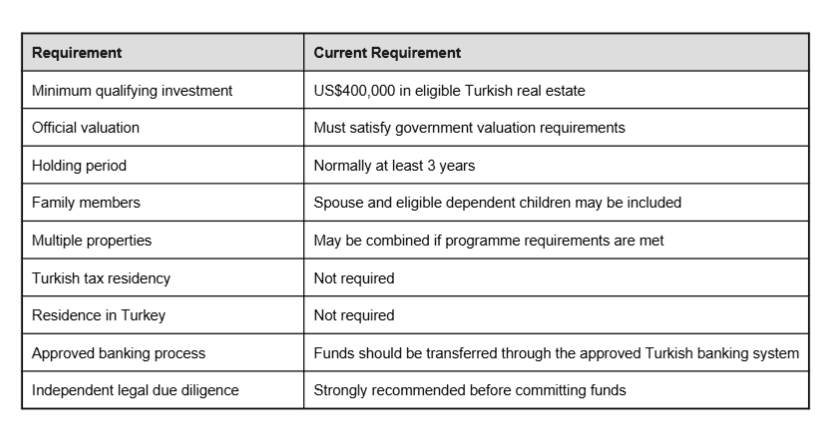
Understanding the US$400,000 investment threshold is only the beginning.
The real challenge is structuring your investment correctly so that it satisfies Turkish citizenship by investment requirements while protecting your long-term financial interests.
Our Istanbul-based immigration lawyers are property specialists from the UK with more than 30 years’ experience helping UK nationals acquire qualifying property in Turkey, complete extensive legal due diligence and submit successful citizenship applications.
- Review your proposed investment structure.
- Confirm citizenship eligibility.
- Compare qualifying property investment opportunities.
- Avoid costly ownership, valuation and legal mistakes.
Book Your Free Turkey Property & Citizenship Strategy Session
Limited private strategy slots available each week.
Trusted by UK nationals globally.
Prefer to speak directly? Tel: +44 208 058 8937.
Email: connect@adviceforexpats.com.
Structuring Your $400,000 Property Investment
The objective should never be simply to qualify for citizenship. Instead, your investment should also deliver strong long-term capital growth, rental income and resale potential while satisfying every legal requirement of the programme.

Meeting the US$400,000 Investment Threshold
The current Turkey citizenship by investment programme requires a qualifying real estate investment of at least US$400,000. However, investors should avoid viewing this figure as an exact target.
One of the most common reasons for complications is the difference between the agreed purchase price and the official government valuation. The independent valuation, completed by a government-authorised valuer through Turkey’s regulated valuation process, is the figure recognised for citizenship purposes.
If this falls below the qualifying threshold, the application may be delayed or require restructuring.
For this reason, many experienced investors purchase comfortably above the minimum threshold, providing a margin of safety against valuation differences and exchange-rate movements.
Choosing the Right Qualifying Property
Not every property in Turkey is suitable for Turkish citizenship by investment.
Residential apartments remain the most popular option, particularly quality developments in Istanbul where rental demand, infrastructure and long-term capital appreciation are strongest. Commercial property can also qualify in certain circumstances, while carefully selected off-plan property in Turkey may provide lower entry prices together with attractive construction-phase capital growth.
Equally important is the developer. Established developers with strong delivery records, clear title deeds and fully approved projects generally present considerably lower investment risk than unknown operators offering unusually attractive prices.
One Property or Several?
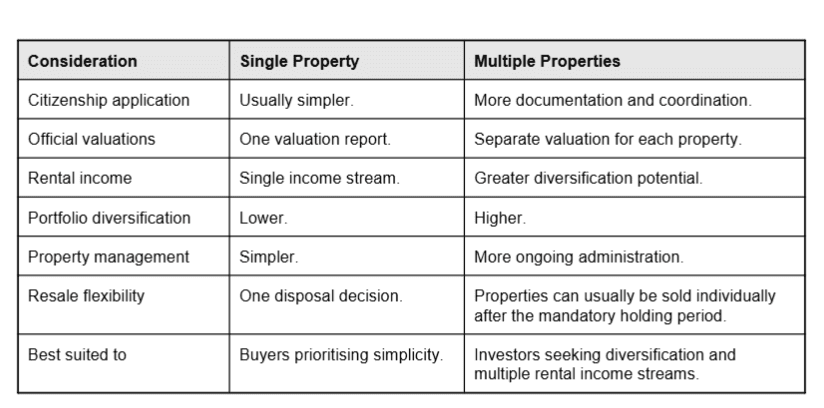
Many UK nationals assume they must purchase a single property worth at least US$400,000. In practice, current regulations may allow more than one qualifying property to be combined, provided the legal and valuation requirements are fully satisfied.
A single property often provides a simpler ownership structure and easier resale after the mandatory holding period. Multiple properties, however, may improve diversification and rental income if properly coordinated.
Structuring Ownership Correctly
Ownership should always be planned before contracts are signed.
For most UK nationals, direct ownership by the principal applicant provides the clearest route through the citizenship process. While spouses and dependent children can usually be included within the same application, joint ownership, company structures, trusts and nominee arrangements may introduce unnecessary complexity unless specialist legal advice confirms they remain appropriate.
Inheritance planning should also be considered at the outset. A structure that satisfies Turkish citizenship by investment should also support your family’s longer-term financial objectives and eventual exit strategy. Before purchasing significant overseas assets, it is also sensible to review our Estate Planning for UK Expats guide to ensure your ownership structure and succession arrangements remain aligned across jurisdictions.
Secure the Right Turkey Property Before Someone Else Does
The way you structure your investment can make the difference between a smooth citizenship application and an expensive delay.
Before reserving a property, let our UK and Istanbul-based specialists help you compare qualifying opportunities, review ownership structures and identify developments that combine Turkish citizenship by investment eligibility with strong long-term investment potential.
Book Your Qualifying Turkey Property Selection Consultation
Limited private strategy slots available each week.
Trusted by UK nationals globally.
Prefer to speak directly? Tel: +44 208 058 8937.
Email: connect@adviceforexpats.com.
Funding Your Investment Correctly
Every stage of the transaction should create a clear documentary trail demonstrating where the money originated, how it was transferred and how it was ultimately used to acquire the qualifying property.
Using the Correct Banking Route
Funds should always be transferred through the approved Turkish banking system using fully traceable transactions. Cash payments or informal arrangements should be avoided entirely.
Before transferring any money, your legal adviser should confirm the seller’s details, the correct payment structure and the documentation required to support your citizenship application. Maintaining a complete audit trail from your UK bank account to the final property purchase helps demonstrate compliance with both Turkish regulations and international anti-money laundering requirements.
Managing Currency and Exchange Rate Risk
Most qualifying property in Turkey is marketed in US dollars, although completion frequently takes place in Turkish Lira using the prevailing official exchange rate.
For UK nationals, however, the transaction usually begins in pounds sterling. Significant exchange-rate movements between reservation and completion can therefore affect the overall cost of the investment.
Many experienced investors use specialist foreign exchange providers to reduce transfer costs and manage currency exposure. Where payments are spread over several months, forward contracts may also help provide greater certainty over the final sterling cost.
Currency fluctuations can materially affect the final sterling cost of a US$400,000 investment. Learn more in our Currency Exchange for UK Expats guide before transferring funds internationally.
Source of Funds and Financial Due Diligence
Like most reputable citizenship by investment programmes, Turkey requires investors to demonstrate the legitimate source of their funds.
Whether the money originates from savings, the sale of a business, investments or another property, supporting documentation should be available before the purchase proceeds.
Equally important is selecting the right payment structure. Reservation deposits, staged payments and completion funds should all follow the agreed legal process, particularly when purchasing off-plan property in Turkey.
Protecting Your Investment
Independent legal advice, carefully drafted purchase contracts and appropriate payment protections all help reduce risk. Where available, secure escrow arrangements or protected client accounts may provide additional reassurance until contractual obligations have been satisfied.
Before transferring US$400,000 or more overseas, every UK national should be confident that the property qualifies, the valuation satisfies the programme requirements and the ownership structure has been reviewed by an experienced Turkish immigration lawyer.
Don’t Transfer US$400,000 Until Your Investment Structure Has Been Independently Reviewed
Once funds have been transferred, correcting ownership, valuation or payment mistakes can be difficult and expensive.
Before committing US$400,000, let Istanbul-based specialists review your proposed investment structure, explain the funding process and help ensure every stage of the transaction supports a successful Turkish citizenship by investment application.
Book Your Private $400,000 Investment Review
Limited private strategy slots available each week.
Trusted by UK nationals globally.
Prefer to speak directly? Tel: +44 208 058 8937.
Email: connect@adviceforexpats.com.
Choosing the Right Property for Long-Term Success

The strongest investments combine legal compliance with excellent fundamentals, including location, construction quality, rental demand and long-term resale potential.
Buy for Long-Term Wealth, Not Just Citizenship
The biggest mistake many international investors make is treating Turkish citizenship by investment as the objective rather than the by-product of a well-chosen investment.
The most successful UK nationals approach it differently. They look for property in Istanbul capable of generating strong rental demand, consistent capital appreciation and excellent resale liquidity, then ensure it also satisfies the citizenship requirements. That approach protects far more than the application itself—it protects the investment.
Istanbul’s strongest developments benefit from powerful long-term drivers, including extensive urban regeneration, expanding transport infrastructure, internationally recognised universities, world-class healthcare and sustained demand from professionals, wealthy Turkish families, overseas investors and medical tourists.
These factors continue supporting both rental income and future resale values.
Why Istanbul Continues to Stand Out
Although there are attractive opportunities across Turkey, most international investors continue to focus on property in Istanbul.
Turkey’s commercial capital benefits from extensive infrastructure investment, world-class healthcare, internationally recognised universities and one of Europe’s largest urban regeneration programmes. The OECD’s economic analysis of Türkiye also highlights the importance of continued infrastructure investment, urban development and structural reforms in supporting long-term economic growth.
Modern earthquake-resistant developments are replacing older housing stock, helping improve both construction quality and long-term investment prospects.
Off-Plan or Completed Property?
Both can qualify for Turkey citizenship by investment, but they offer different advantages.
Carefully selected off-plan property in Turkey often provides lower entry prices, flexible staged payments and the potential for capital appreciation during construction. Well-selected developments may appreciate during construction, although performance ultimately depends on location, developer quality and market conditions.
Completed property, meanwhile, may appeal to investors seeking immediate rental income or greater certainty over the finished product.
Think About Your Exit Before You Buy
Every investment should have an exit strategy.
After the mandatory holding period, you want to own a property that appeals to the widest possible market—not one purchased solely because it qualified for citizenship.
Developments built by reputable developers, located in established districts and supported by strong domestic demand are generally easier to rent, refinance and eventually sell. These qualities often prove far more valuable than simply meeting the minimum investment threshold.
Location should never be assessed purely on investment potential. Before committing to a qualifying property, UK nationals should also compare the safest places to live in Turkey, as security, healthcare, infrastructure and long-term lifestyle all influence future demand and resale prospects.
Many investors also underestimate the legal and practical risks involved in selecting the wrong development. Understanding how to avoid costly mistakes when buying property in Istanbul can help protect both your citizenship application and your long-term investment performance.
Legal Due Diligence Before You Buy
No matter how attractive a development appears, never assume it is suitable for Turkish Citizenship by Investment until independent legal due diligence has been completed.
Verify the Property Before You Commit
Every qualifying property should undergo comprehensive legal checks before contracts are exchanged or funds are transferred.
Your independent lawyer should confirm that the property has clear title, appropriate planning approvals and no legal issues that could affect ownership or citizenship eligibility. They should also ensure the development satisfies the programme’s current requirements and has not previously been used in another citizenship application where restrictions may apply.
Small issues identified early are usually straightforward to resolve. Discovering them after completion can be considerably more expensive. Our Buying Property in Turkey Guide explains the purchase process, legal requirements, taxes and the practical steps UK nationals should understand before committing to a property investment.
Why the Official Valuation Matters
One of the most important legal documents is the independent valuation prepared through Turkey’s authorised valuation system.
This report is used to support the citizenship application and may differ from the agreed purchase price. Understanding that distinction before committing funds helps avoid unnecessary complications and provides confidence that the investment satisfies the required threshold.
Title Deeds and the Three-Year Restriction
Qualifying property must also comply with the programme’s title deed requirements.
Following completion, the relevant restriction preventing disposal during the mandatory holding period should be correctly recorded. Your legal adviser should explain precisely how these restrictions operate and what they mean for future refinancing, inheritance planning and eventual resale.
Although the property generally cannot be sold during the qualifying period, it can often continue producing rental income while citizenship is being maintained.
Work With Independent Specialists
The strongest outcomes are usually achieved when independent lawyers, experienced property advisers and cross-border tax specialists work together from the outset. That coordinated approach ensures the ownership structure, valuation, banking arrangements and legal documentation support a successful Turkish citizenship by investment application while protecting your long-term investment.
Obtaining independent professional advice before signing a contract can help prevent costly and difficult-to-correct mistakes later.
UK and Turkish Tax Considerations
Buying property in Turkey to secure Turkish citizenship by investment does not automatically make you a Turkish tax resident. This is an important distinction and one that many UK nationals misunderstand.
Citizenship, residency and tax residency are three separate legal concepts. Many investors complete a qualifying property purchase, obtain Turkish citizenship and continue living elsewhere without becoming subject to Turkish tax on their worldwide income.
In Turkey, buyers should budget for acquisition costs such as title deed fees, annual property taxes and, where applicable, tax on rental income. Capital gains tax may also become relevant depending on when the property is sold and the legislation in force at the time.
UK investors should also consider their ongoing UK tax obligations. Reporting requirements, capital gains tax and inheritance planning can all influence the overall return on the investment, particularly where overseas property forms part of a wider estate. The Association of Chartered Certified Accountants (ACCA) also publishes guidance on international taxation and cross-border financial planning that may help internationally mobile investors understand the wider tax landscape.
Turkey’s recently announced 20-year territorial tax regime has also increased international interest. Qualifying new tax residents may benefit from an exemption on many categories of foreign-source income for up to twenty years, positioning Turkey as an increasingly attractive destination for internationally mobile entrepreneurs and investors.
While Turkish citizenship by investment does not require fiscal residency, this reform could increase future demand for premium property in Istanbul.
Professional cross-border advice helps ensure your citizenship strategy and tax planning work together rather than against each other. If you intend to relocate after obtaining Turkish citizenship, our Turkey Taxes for UK Nationals guide explains the principal taxes affecting residents, investors and property owners.
Protect Your $400,000 Investment Before You Transfer a Single Pound
A small legal or tax mistake can become an expensive problem after completion.
Before committing $400,000, let our Istanbul-based specialists review your proposed investment structure, identify potential risks and ensure every stage of the transaction supports a successful Turkish citizenship by investment application.
Book Your $400,000 Investment Protection Review
Limited private strategy slots available each week.
Trusted by UK nationals globally.
Prefer to speak directly? Tel: +44 208 058 8937.
Email: connect@adviceforexpats.com.
Exit Strategy and Selling After Three Years
Under the current Turkey citizenship by investment programme, qualifying property is generally required to be retained for a minimum of three years. Once that period has expired, investors are normally free to sell while retaining their Turkish citizenship, subject to the legislation in force at that time.
A development chosen purely because it qualifies for citizenship may prove difficult to sell later. By contrast, quality property in Istanbul located in established districts with strong domestic demand is more likely to retain its appeal long after the holding period has ended.
Some investors choose to realise their capital gains after three years, while others retain the property to continue benefiting from rental income and long-term appreciation. If your long-term plans extend beyond property ownership, our Moving to Turkey from UK guide guide explains taxation, healthcare planning before relocating, visas, residency and the wider considerations involved in relocating successfully.
Neither strategy is inherently better. The right decision depends on your financial objectives, tax position and wider investment portfolio.
Common Mistakes That Can Delay or Jeopardise Your Application
Most problems encountered during a Turkish citizenship by investment application are avoidable.
The most common mistake is assuming that any property worth US$400,000 automatically qualifies. In reality, official valuations, ownership structure, banking procedures and legal documentation must all satisfy the programme requirements.
Other investors focus entirely on obtaining citizenship while overlooking the investment itself. Purchasing from an inexperienced developer, ignoring long-term rental demand or failing to consider future resale prospects can significantly reduce the overall value of the investment.
A successful application requires property specialists, independent lawyers and cross-border advisers working together from the outset. Getting the structure right before funds are transferred is considerably easier—and significantly less expensive—than trying to correct problems afterwards.
Why Choose Advice for Expats
Structuring a US$400,000 Turkey property investment involves considerably more than selecting a development and signing a contract. Property acquisition, legal due diligence, immigration, tax planning and foreign exchange all need to work together to achieve the best possible outcome.
Advice for Expats coordinates every stage through an experienced network of Istanbul-based professionals, including specialist immigration and property lawyers with more than 30 years’ experience advising international investors on Turkish citizenship by investment.
Rather than promoting individual developments, we begin by understanding your objectives. Only then do we recommend carefully vetted opportunities that combine citizenship eligibility with strong investment fundamentals, supported by reputable developers, extensive legal due diligence and independent valuation procedures.
Our service extends well beyond the initial purchase. We can assist with property selection, legal coordination, citizenship applications, private viewing trips, foreign exchange, fiscal residency planning, ongoing property management and long-term financial planning, giving UK nationals a single point of contact throughout the entire process.
At Advice for Expats, we don’t simply help clients buy property in Turkey. We help them make better investment decisions.
Ready to See Qualifying Properties in Person?
Our private viewing trips are designed for serious buyers who want to compare qualifying property in Turkey, meet reputable developers and complete every stage of the process with experienced local guidance.
Book Your Private Turkey Property Viewing Trip
Limited private strategy slots available each week.
Trusted by UK nationals globally.
Prefer to speak directly? Tel: +44 208 058 8937.
Email: connect@adviceforexpats.com.
FAQs: Structuring a $400,000 Turkey Property Investment
These frequently asked questions address the issues UK nationals most commonly raise when structuring a US$400,000 Turkey property investment for Turkish citizenship by investment.
Is US$400,000 enough for Turkish Citizenship by Investment?
Yes. The current Turkish citizenship by investment property route requires real estate worth at least US$400,000, with a restriction preventing its sale for three years. However, investors often buy above the minimum to protect against valuation differences, exchange-rate movements and transaction costs that may not count towards the threshold.
Is the US$400,000 threshold based on the purchase price or official valuation?
The qualifying property in Turkey must meet the valuation and registration standards set by the relevant Turkish authorities. The contract price alone should never be relied upon. An authorised valuation may differ from the advertised price, so confirming the recognised value before committing funds is essential.
Can I buy several properties for Turkish Citizenship by Investment?
Yes, but combining properties for Turkish citizenship by investment requires precise legal coordination. Each property, payment, valuation and title record must align with the same qualifying application under the rules in force at completion. While a single property is often simpler, multiple units may offer diversification and stronger rental-income potential when structured correctly.
Can my spouse jointly own the qualifying property in Turkey?
Joint ownership can complicate a Turkish citizenship by investment application if the principal applicant does not personally hold the required qualifying value. Many investors instead place the property in the principal applicant’s name and include the spouse through the citizenship application. Specialist Turkish legal advice should always confirm the optimal structure before contracts are signed.
Can my spouse and children receive Turkish citizenship through my investment?
Yes. A qualifying Turkish citizenship by investment application can typically extend to the principal applicant’s spouse and eligible dependent children, subject to current documentation and dependency requirements. Family eligibility should be reviewed in advance, particularly where adult children, previous marriages, custody arrangements or differing surnames are involved.
Can off-plan property in Turkey qualify for Turkish citizenship?
Certain off-plan property in Turkey may qualify where the project, contract, valuation, registration and payment structure meet current regulatory requirements. Investors should confirm when the property becomes eligible for the citizenship application and whether title or a qualifying preliminary sale contract will be available before committing to a developer’s payment plan.
H3: Can I rent out property purchased for Turkish Citizenship by Investment?
Yes. Qualifying property in Turkey can generally be rented during the three-year holding period, provided ownership and title restrictions remain intact. Rental income can help offset ongoing costs, but investors should assess Turkish tax obligations, property management considerations, tenant demand and whether the development permits short- or long-term letting.
H3: Does buying property in Turkey make me a Turkish tax resident?
No. Purchasing property in Turkey or obtaining Turkish citizenship does not automatically determine tax residency. Citizenship, immigration residence and fiscal residence are separate concepts. Your tax position will depend on Turkish domestic rules, time spent in the country, personal circumstances and any applicable double taxation agreements, so cross-border tax advice is strongly recommended.
People Also Ask: Structuring a $400,000 Turkey Property Investment
These are some of the most common questions asked by UK nationals considering Turkish citizenship by investment, together with concise answers to help you make more informed investment decisions.
Is Turkish Citizenship by Investment worth it?
For many UK nationals, Turkish citizenship by investment offers far more than a second passport. When combined with carefully selected property in Turkey, it can provide international diversification, rental income, long-term capital growth and greater lifestyle flexibility.
Why do many UK nationals choose property in Istanbul over other Turkish cities?
Property in Istanbul generally offers the strongest combination of rental demand, capital appreciation, infrastructure and resale liquidity. As Turkey’s commercial and financial centre, it attracts a broader buyer and tenant market than most regional cities.
Is buying above US$400,000 a sensible investment strategy?
Often, yes. Purchasing above the minimum threshold provides a buffer against valuation differences and exchange-rate movements while giving investors access to higher-quality property in Turkey with stronger long-term investment fundamentals.
What makes a Turkey property investment lower risk?
The strongest Turkey property investment combines a prime location, reputable developer, independent legal due diligence, strong domestic demand and realistic resale prospects. Citizenship should complement these fundamentals rather than replace them.
Can Turkish Citizenship by Investment become more expensive in the future?
Possibly. Investment migration programmes evolve over time and qualifying thresholds can change. Investors considering Turkish citizenship by investment may benefit from acting while the current property investment threshold remains available.
Useful Resources
The following official resources provide reliable information on the legal framework governing foreign property ownership.
Borsa İstanbul: Official information on Turkey’s capital markets, listed companies and investment environment, helping investors better understand the country’s broader economic landscape and long-term investment outlook.
Türkiye Banks Association: Official guidance on Turkey’s banking system, member banks and financial infrastructure, providing useful background for overseas investors transferring funds and purchasing property in Turkey.
International Monetary Fund (IMF) Türkiye: Independent economic analysis, country reports and financial-sector assessments covering Türkiye’s economy, fiscal outlook and macroeconomic performance. This provides valuable background for investors assessing the country’s long-term investment environment.
Start Your Journey
Structuring a US$400,000 Turkey property investment correctly can make the difference between a straightforward Turkish citizenship by investment application and an expensive mistake.
The strongest investors do not simply buy qualifying property—they build a long-term investment strategy that protects their capital, supports future growth and creates lasting value for their family.
Start Structuring Your Turkey Property Investment Today
A successful Turkish citizenship by investment application begins long before contracts are signed.
Before you reserve a property or transfer US$400,000, let our Istanbul-based specialists help you identify the right opportunity, structure your investment correctly and guide you through every stage of the process.
Book Your Private Turkey Investment Strategy Session
Limited private strategy slots available each week.
Trusted by UK nationals globally.
Prefer to speak directly? Tel: +44 208 058 8937.
Email: connect@adviceforexpats.com.